

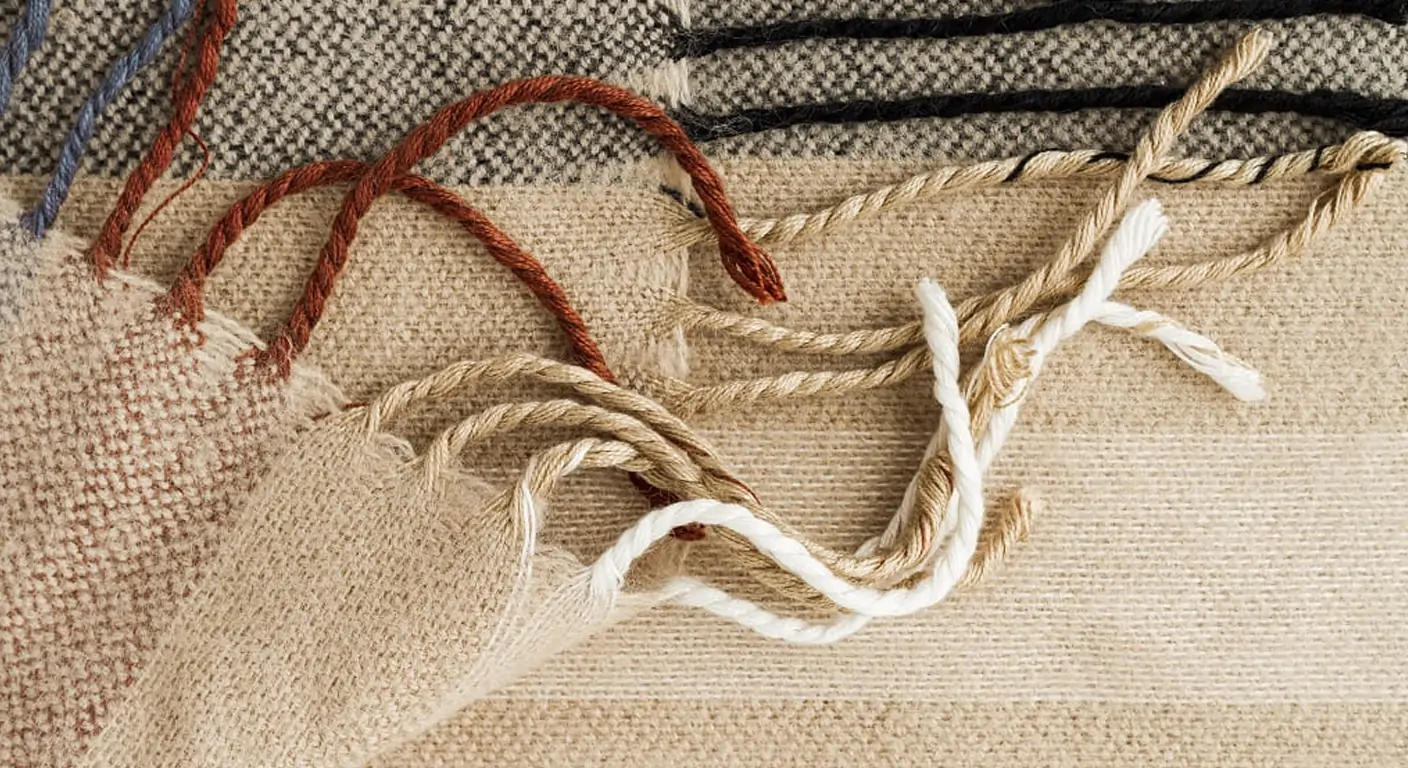
The jute industry in West Bengal had been in the Indian agri-food-industrial scene since decades. The “Golden Fibre” is jute – one of the world’s most eco-friendly and versatile natural fibres. The jute industry remains vital in eastern India, from assisting farmers to produce sustainable packaging to significantly boosting exports. Today, every leading jute bags manufacturer in Kolkata as well as jute bags manufacturers in West Bengal benefits from a rich legacy that has shaped the region into a global hub for jute production and trade.
The jute industry is once again receiving attention globally as industries pay attention to sustainability. Knowing its history and uses, coupled with its role in agriculture, enables a better appreciation of why this natural fibre is still relevant in today’s times.
The History of Jute Industry in India
The history of jute industry can be traced several centuries before when the local community used jute fibre to store the ropes, mats and household products. Commercial production did however start during the colonial era, in the 19th century by the British.
It was in 1855 that the first jute mill was started in India near to Kolkata. Its close association with fertile river plain with good water supply and easy transport facilities in comparison to other regions proved ably suitable for the processing of jute on a big scale. With the passage of time, many mills sprang up on the banks of Hooghly River, and West Bengal became the hub of the jute industry in India.
The rising demand for sacks and packaging in the Industrial Revolution trend propelled the growth of the industry.With the start of the Industrial Revolution, the need for packaging materials and sacks further propelled the growth of the industry. By the early 20th century, the landscape of Bengal had evolved to include one of the world’s greatest producing and exporting markets for jute goods.
Understanding Jute Manufacturing History
The development of the jute industry can be seen in a fascinating way from the traditional hand-processed jute to the current technological advances in industries.
In the early days jute fibres were extracted by hand from the harvested stalks; the process was called retting, in which the jute stalks were immersed in water to get the fibre from it. The fibres were subsequently cleaned, dried and woven to produce some basic items.
The mechanisation of mills opened up a new sphere for improved efficiency. There are a number of steps in the modern manufacturing process:
- Fibre selection and grading
- Softening and conditioning
- Carding and drawing
- Spinning into yarn
- Weaving or stitching
- Finishing and quality inspection
Today, advanced technology enables manufacturers to produce a wide range of products, including shopping bags, promotional bags, agricultural sacks, geo textiles, and decorative items. Jute bags manufacturer in Kolkata is known for producing bags with a blend of traditional and modern manufacturing techniques to serve the domestic and overseas demand.
The Role of Jute Fabric in Agriculture
The utilization of jute fabric in the agriculture industry goes beyond packaging. The uses of jute-based products are increasing among farmers and agriculture industries to meet their demands of biodegradable, durable and environmentally friendly materials.
Crop Packaging and Storage
The use of jute fabric for storing and transporting agricultural crops is one of the most familiar use of jute for agriculture. Jute bags are used in lots of applications, including:
- Rice
- Wheat
- Pulses
- Potatoes
- Coffee beans
- Spices
Unlike synthetic materials, it does not prevent air exchange, which helps maintain quality of agro goods during storage and delivery.
Soil Protection
A geotextile which uses jute, has a significant role in soil erosion control. Such fabrics are used for slope stabilization, river bank protection, agricultural fields, and are also naturally decomposing over time.
Weed Control
The application of jute mulch mats in agricultural or horticultural practices has become more popular. These have the benefits of weed suppression, soil moisture retention, an increase in soil health and environmentally harmful chemicals not being added to the soil.
Growth of the West Bengal jute industry
The jute industry of West Bengal is still the Holy Grail of jute industry in India. The State plays an important role in the cultivation, processing and manufacturing of jute in the country.
There are several reasons for West Bengal’s supremacy:
Ideal Climatic Conditions
The climate of the state is humid and alluvial soil is also fertile which makes it suitable for cultivation of jute. The major jute producing areas include Nadia, Murshidabad, North 24 Parganas and Hooghly.
Strong Manufacturing Ecosystem
There are many jute mills, processing units and export oriented industries in West Bengal. This fully developed infrastructure enables the production of large quantities and creates jobs for thousands of people.
Skilled Workforce
A long standing practice of jute growing and manufacturing has created a skilled labor force to ensure adherence to production standards of excellence.
Government Support
Several campaigns promoting green packaging and lowering plastics use have resulted in new growth opportunities for the jute industry.
Consequently, all the known jute bag manufacturers in West Bengal are still contributing to the local livelihood and sustainability movement all over the world.
History of Jute Trade in West Bengal
The economic development of West Bengal was as much intricately linked to the History of jute trade in West Bengal. In the later half of the 19th and early 20th century, this city became one of the great global trading hubs for jute and jute products.
Hooghly River and the Port of Kolkata were at the heart of the city, making transportation of raw materials and finished goods easy. The traders sold jute goods to Europe, North America and other parts of Asia, where the demand for jute products was high.
Since the creation of India in 1947, there has been a lot of challenges to the industry. Though much of his jute growing area got transferred to present-day Bangladesh, many jute mills are still here in West Bengal. In spite of these disruptions the industry was able to develop and still flourish and innovate.
The state’s jute industry continues to contribute greatly to India’s export economy today.
Jute Production and Export in Kolkata
Malta along with Kolkata is still playing the lead role in jute cultivation and export. It is the center of production, processing and export of various jute products.
Popular products of exports are the following:
- Jute shopping bags
- Promotional bags
- Agricultural sacks
- Decorative home products
- Jute yarn
- Geotextiles
- Industrial packaging materials
Modern Jute Packaging Solutions for a Sustainable Future
The need for innovative jute packaging solutions is increasing notably as per industries. More and more companies are switching to jute products that are reusable or biodegradable, in place of plastic packages.
It has some benefits in the contemporary jute packaging technology:
- Environmentally friendly
- Durable and reusable
- Cost-effective
- Customisable for branding
Industries like retail, agriculture, food processing, fashion and corporations are implementing jute packaging widely.
As environmental impacts get tighter and more consumers are aware of the need, the possibilities of jute packaging are extremely bright.
Conclusion
Historically produced to the present day jute is still one of the valuable fibres produced in the world. The fact that the jute industry dates back to a long time ago, its growth from time to time in the history of jute industry and continued prosperity of west Bengal jute industry are all testimony to the great significance, value and utilization of the remarkable fibre jute.
The Role of Jute Fabric in Agriculture highlights its contribution to sustainable farming, crop protection, and environmentally responsible packaging. In the meantime, the History of jute trade in West Bengal and current production and exports of jute in Kolkata exhibits the continued influence of this region over the world markets.
In an age defined by sustainability, every leading jute bags manufacturer in West Bengal, and all jute bags manufacturers in West Bengal, are pressing ahead toward a greener future by providing innovative solutions in jute packaging that have a positive impact on both industry and the environment.
https://shorturl.fm/jXOQP
https://shorturl.fm/Btsb3
https://shorturl.fm/CTT7c
https://shorturl.fm/cfy1o
https://shorturl.fm/EMg5P
https://shorturl.fm/HTE14
https://shorturl.fm/6Bzsi
https://shorturl.fm/XLn9Q
https://shorturl.fm/JJfRM
https://shorturl.fm/I9l6L
https://shorturl.fm/PV8yz
https://shorturl.fm/L56uJ
https://shorturl.fm/k5oUf